

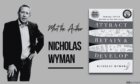


In Conversation With
Nicholas Wyman
Hi Nicholas, thank you for joining us! Before we dive into “Attract, Retain & Develop”, please tell us about yourself and your current role.
Nicholas Wyman:
Thank you, it’s great to be here.
I’m Nicholas Wyman, a workforce practitioner and CEO of the Institute for Workplace Skills & Innovation America, where I focus on building skills-based career pathways that connect people to meaningful employment.
My work sits at the intersection of business, education, and public policy, helping employers solve talent shortages while creating opportunities for individuals. Over the past two decades, I’ve worked with employers across industries, and both private companies and government agencies, to rethink how they attract, develop, and retain talent.
What drives me is the belief that talent is universal, but opportunity is not. Employers have a powerful role to play in closing that gap.
What’s the origin story for your latest book, Attract Retain & Develop: Shaping a Skilled Workforce for the Future? How did it evolve from an idea to a tangible title? Tell us more about this journey.
Nicholas Wyman:
The idea for my latest book came directly from the frustrations I was hearing from employers everywhere. They were struggling to find talent, yet often overlooking capable people because of outdated hiring practices.
I realized there wasn’t a practical playbook that combined real-world workforce strategies with leadership and culture in a way that business leaders could immediately apply.
The book evolved over several years as I gathered case studies, tested ideas through our programs, and refined what actually works in practice.
My goal was to create something actionable rather than that leaders could use to build resilient, future-ready teams.
Your book argues that traditional hiring models are outdated. What specifically is broken in the way most organizations recruit today, and what mindset shift do HR leaders need to make first to truly “disrupt” their approach?
Nicholas Wyman:
The biggest problem is that many organizations hire based on traditional proxies for talent, like degrees, credentials, and job titles, instead of actual capability.
This approach unintentionally filters out incredible candidates who have the skills but not the traditional ‘pedigree’. It also slows hiring and contributes to persistent talent shortages.
The mindset shift is moving from credential-based hiring to skills-based hiring, asking, “What can this person do, and how can they grow?” rather than “Where did they go to school?”
Once leaders make that shift, they open the door to a much broader, more capable talent pool.
Your own career path, from chef to global workforce practitioner, is unconventional. How did that experience shape your philosophy on talent, and what can employers learn from non-linear career journeys when evaluating candidates?
Nicholas Wyman:
Starting my career as a chef taught me things that you can’t learn from a text book: soft skills like time management, communication and team-building, and critical thinking. Kitchens are performance-based environments, you either deliver or you don’t, and that shaped how I view talent.
My transition into workforce development reinforced that many of the most capable people willing to take initiative and problem-solve come from non-traditional backgrounds. Employers who overlook non-linear career paths miss out on adaptable, resilient, and highly motivated individuals.
Today’s workforce is far more dynamic, and hiring practices need to reflect that reality.
Through your work with the Institute for Workplace Skills & Innovation America, you’ve helped create thousands of skills-based career pathways, including apprenticeships for people with disabilities. What lessons from those programs can HR leaders apply to build more inclusive and effective talent pipelines?
Nicholas Wyman:
One of the biggest lessons is that inclusive hiring isn’t charity, it’s actually smart business with a proven ROI for both individual businesses and for the economy, and our society, at large.
When employers focus on skills and provide structured pathways like apprenticeships, they uncover talent that was previously overlooked. We’ve seen firsthand that with the right support and mentorship, individuals thrive and become highly loyal, high-performing employees.
Another key lesson is that partnerships matter. It’s key to work with community organizations and training providers, as that reduces the burden on employers. Inclusion expands your talent pool and strengthens your organization at the same time.
Many employers are concerned about automation and AI reshaping jobs. Based on your research and workforce experience, what skills should organizations be prioritizing now to future-proof both their workforce and their business?
Nicholas Wyman:
AI is transforming work, but the real challenge that comes with utilizing this technology is ensuring trust, good judgment, and human capability. The risk isn’t just that AI will replace tasks, but that people may over-rely on it without critical thinking.
That means the most important skills are human skills: adaptability, communication, ethical judgment, and problem-solving. Technical literacy is important, but the ability to question, interpret, and apply technology responsibly is what creates value.
Organizations that invest in these durable human skills will be far better positioned to navigate whatever comes next.
As an author, what are 3 other books you’d recommend to our audience? Why?
Nicholas Wyman:
As someone who works at the intersection of workforce strategy, business performance, and human capability, I tend to look beyond mainstream HR titles. Talent systems rarely fail because of policy. They fail because of behavior, stress, culture, and leadership blind spots.
Three books that have shaped my thinking:
Atomic Habits by James Clear
Clear’s central argument is simple: outcomes are driven by systems, not willpower. That applies directly to organizations. Engagement, productivity, and inclusion are the result of repeated behaviors reinforced over time. If leaders want change, they must design better systems and reward the right daily actions. Culture is not a slogan. It is an institutionalized habit.
The Mindbody Prescription by John Sarno
This book explores how chronic stress manifests physically. In organizations, that same stress shows up as burnout, disengagement, and turnover. Too many workplaces wear chronic pressure as a badge of honor. It is not. It is a performance tax. Sustainable output requires healthier environments and leaders who understand the cost of hidden strain.
The Gifts of Imperfection by Brené Brown
Brown’s work on vulnerability and courage is ultimately about trust. And trust drives performance. Innovation, accountability, and retention depend on psychological safety. High standards and empathy are not opposites. The best organizations combine both. When people feel safe to speak up and grow, performance follows.
For me, workforce strategy is not just about hiring models or talent pipelines. It is about energy, resilience, and behavior at scale. Organizations that understand that outperform those that treat talent as a transactional process.
Visit Book
Website
Visit Book
Page

Author of Attract, Retain & Develop, Nicholas “Nick” Wyman, began his career as an award-winning chef. Transitioning from the culinary arts to the business world, Nick leveraged his leadership experience to become a globally recognized workforce practitioner.
As the CEO of the Institute for Workplace Skills and Innovation Group (IWSI), he redefines career pathways, transforming how the modern world views skills and success.
Under his leadership, IWSI has ignited over twenty thousand skill-based career paths. Nick is the author of two books and contributes to Forbes, Fast Company, the MIT Press Journal, and CNBC.